

1. Launch an EC2 Instance:
- Navigate to the EC2 dashboard and click on
Launch Instance. - Choose an Amazon Machine Image (AMI) such as
Amazon Linux 2023 AMI. - Select
t2.micro(part of the AWS Free Tier). - Select
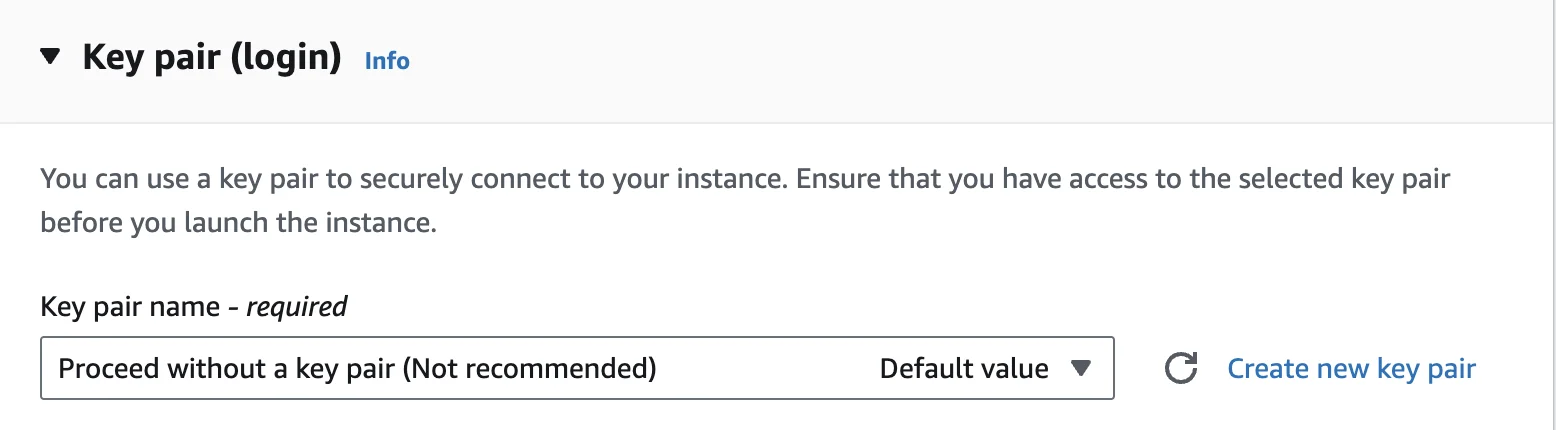
Proceed without a key pair
- On the
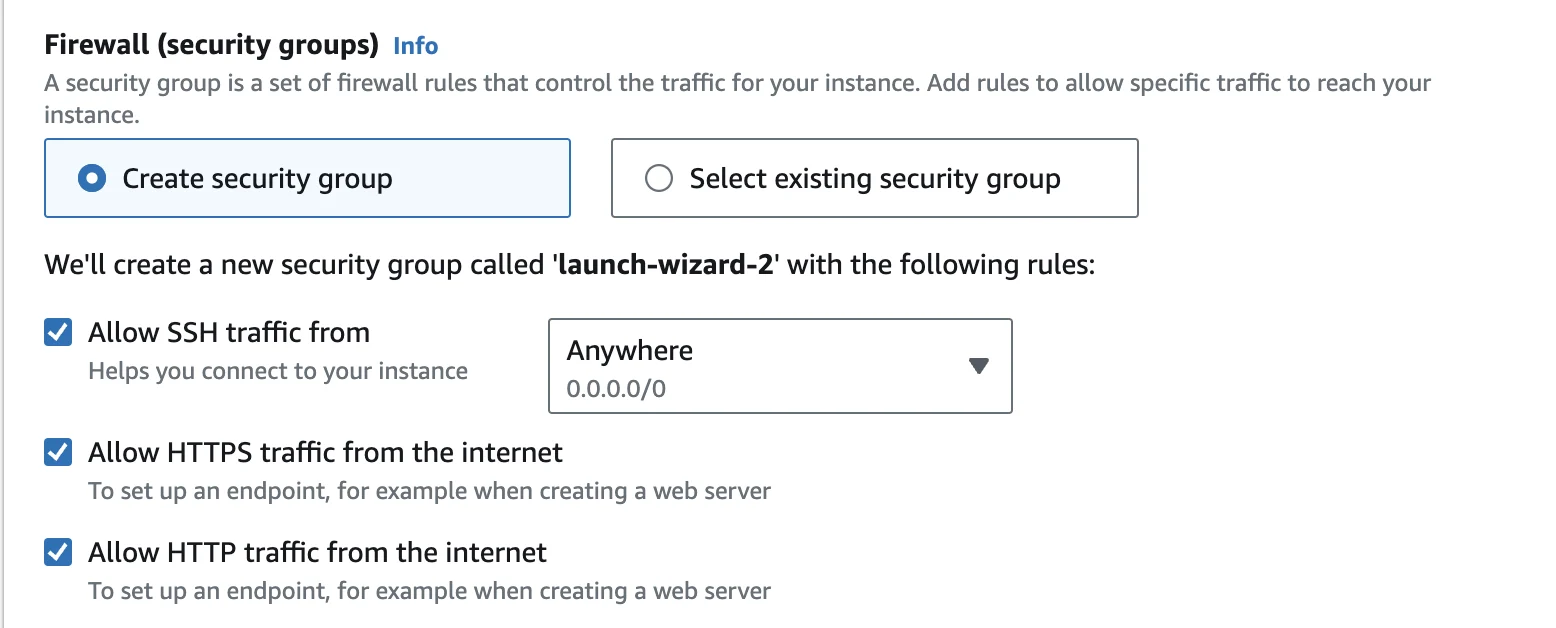
Configure Security Groupstep, create a new security group:- allow
ssh traffic. - allow
HTTPS traffic. - allow
HTTP traffic.
- allow
- Review and launch the instance.
2. Connect to the EC2 instance:
- Navigate to your EC2 instance and click on
Connect. - Leave the default parameters and click on
Connectagain. - Your are now connected to your instance.
3. Set up your instance:
The command lines in this step demonstrate how to install a Node.js agent. If you are running Forest on another agent, please adapt the following to your specific stack.
- Update the instance:
- Install Git:
- Clone your repo:
- Install Node.js and npm:
- Navigate to your project directory and install the necessary packages:
- Set up all the necessary environment variables provided by the Forest environment creation wizard.
-
Add the
APPLICATION_PORTenvironment variable to be able to contact the server from outside. In this example, we will chooseAPPLICATION_PORT=3310. If you choose another port, please adapt the next steps accordingly. - Start the agent
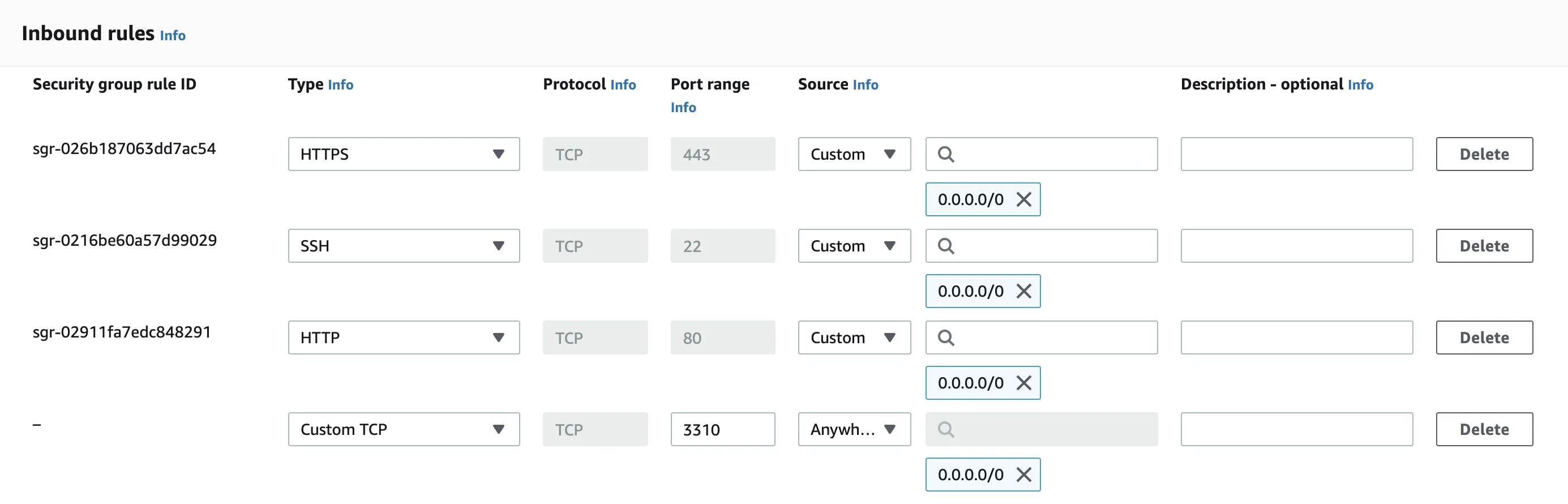
4. Adjust security group rules:
- Navigate to your EC2 instance’s security group.
- Click on
Edit inbound rules. - Add a Custom TCP inbound rule to allow on port
3310.
5. Create a target group:
- In the AWS Management Console, navigate to the EC2 service.
- Under “Target Groups”, click
Create Target Groups. - Ensure target type is instance.
- Choose HTTP to
3310. - Ensure VPC is set to the same VPC as your EC2 instance.
- Setup the health checks as set to
/forest. - On the next step, select instance and click on
Include as pending below. - Finally create the target group.
6. Request a certificate using AWS Certificate Manager (ACM):
- Navigate to ACM and click on
Request a certificate. - Enter your domain name and validate the domain ownership using DNS validation.
- After viewing the new created certificate, click on
Create records in Route 53. - Wait for the certificate to be validated (this can take some time < 1mn).
7. Set up an Application Load Balancer (ALB):
- In the AWS Management Console, navigate to the EC2 service.
- Under “Load Balancers”, click
Create Load Balancer. - Choose
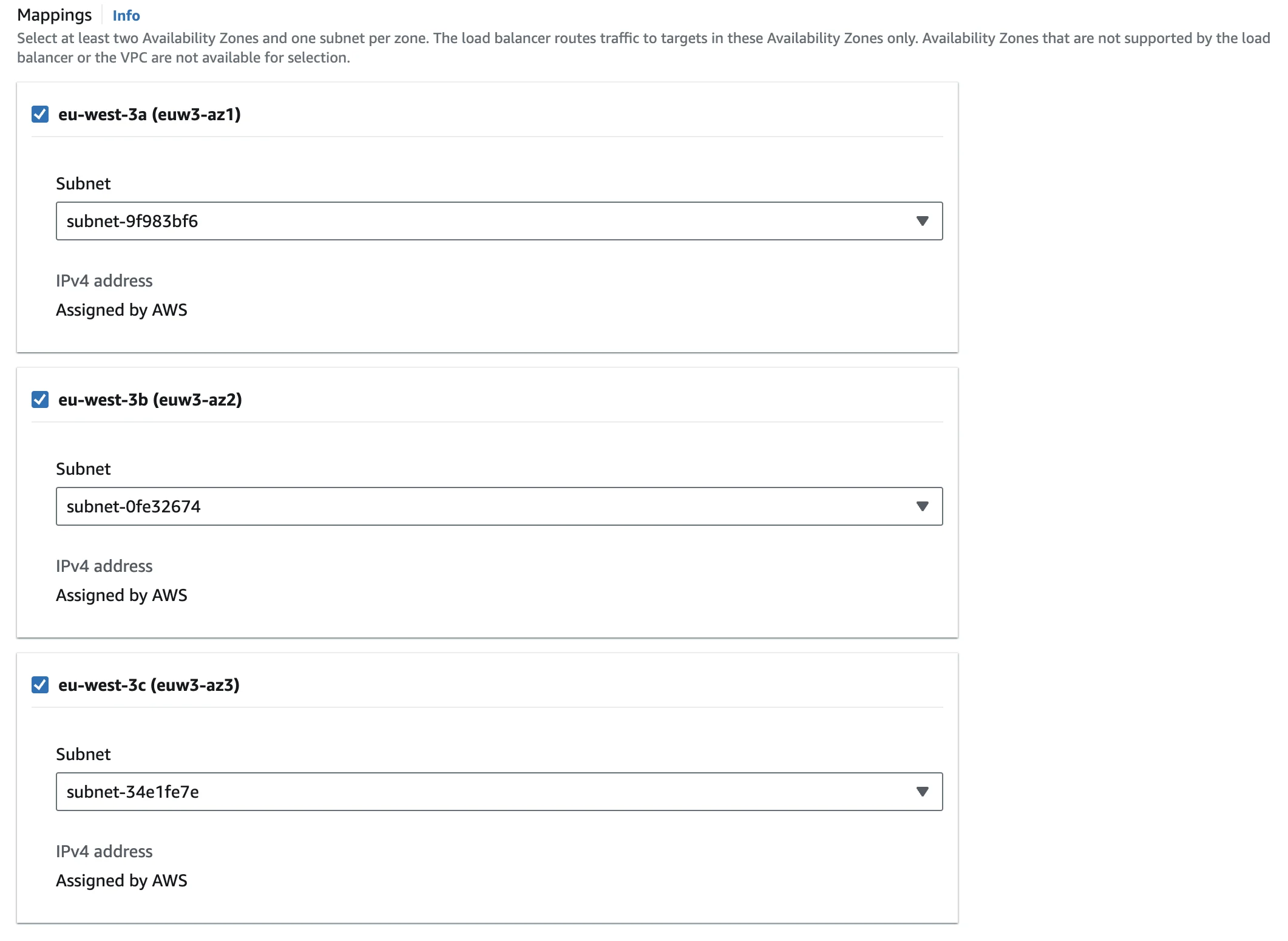
Application Load Balancerand follow the setup. - Ensure the ALB is set to the same VPC as your EC2 instance.
- Select all regions.
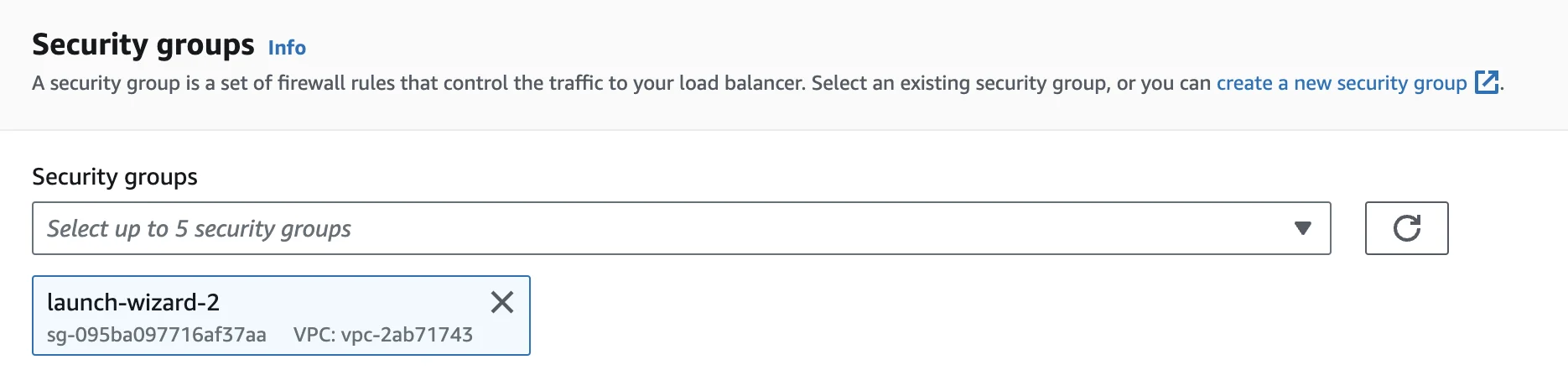
- Remove default security group and select the group associated to the newly created instance.
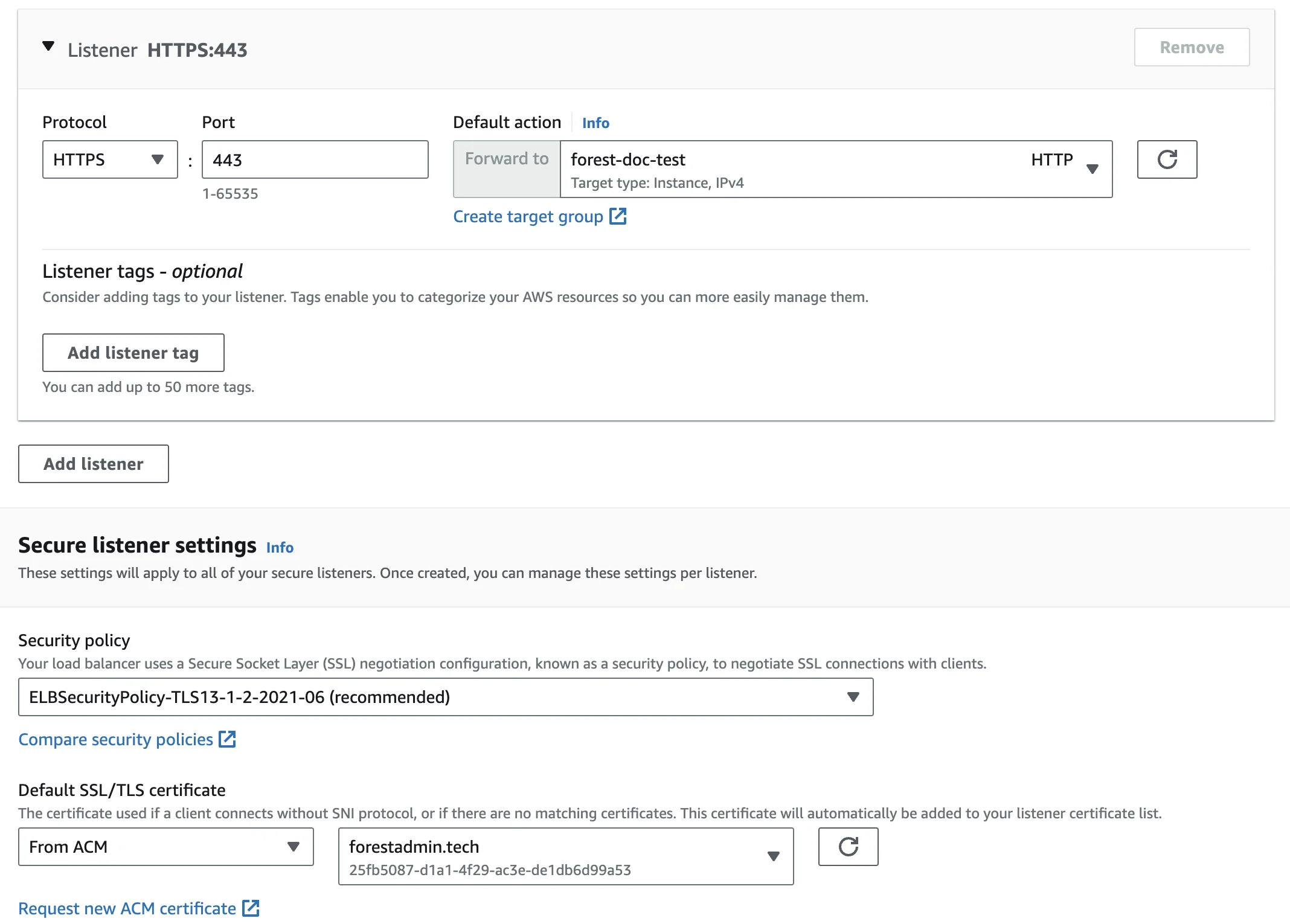
- Add an HTTPS listener and choose previously created target group and certificate.
- After creating the ALB copy the
DNS name.
8. Add CNAME to Route53:
- Navigate to Route53 and choose your hosted zone (domain).
- Create a
CNAMErecord with the domain name filled in the certificate and theDNS nameof the ALB.
9. Finalize:
Check your domain. You should be able to access your Forest panel environment hosted on AWS. 🎉This is a basic setup, and there are many optimizations and security enhancements (like using RDS, tightening security groups, etc.) that can be done for a production-ready deployment. Please refer to the AWS documentation to go deeper.